
Use of Artificial Intelligence in Education
Imagine having a personal tutor available 24/7, a study assistant that knows exactly where you’re struggling, and tools that adapt to your unique learning style—all without breaking the bank. That’s the promise of artificial intelligence in education, and by 2026, these innovations will be transforming classrooms and study sessions worldwide.
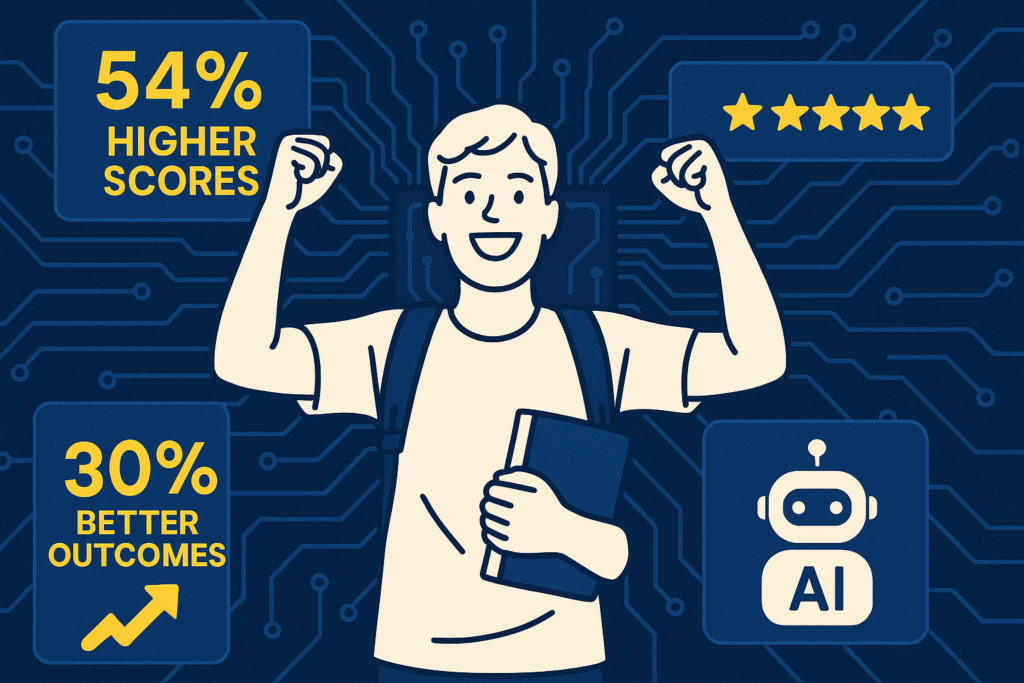
The use of artificial intelligence in education is no longer just a futuristic concept—it’s happening right now, with measurable results. Recent research shows that students in AI-powered learning environments achieve 54% higher test scores, demonstrate 30% better learning outcomes, and experience 10 times more engagement compared to traditional methods. The numbers tell a compelling story: 92% of university students now use AI tools in some form, representing a dramatic surge from just 66% in 2024.
The Market Growth is Explosive: The AI education market is projected to grow from $7.57 billion in 2025 to $112.30 billion by 2034, reflecting unprecedented investment in educational technology. This isn’t hype—it’s a fundamental transformation in how we learn.
Whether you’re a student seeking to enhance your performance, a parent supporting your child’s educational journey, or an educator exploring innovative teaching methods, understanding how AI will impact student success in 2026 is crucial. This guide will walk you through the top ways AI will improve student outcomes, with practical examples backed by real research you can start using today.
Step 1: Leverage AI-Powered Personalized Learning Platforms
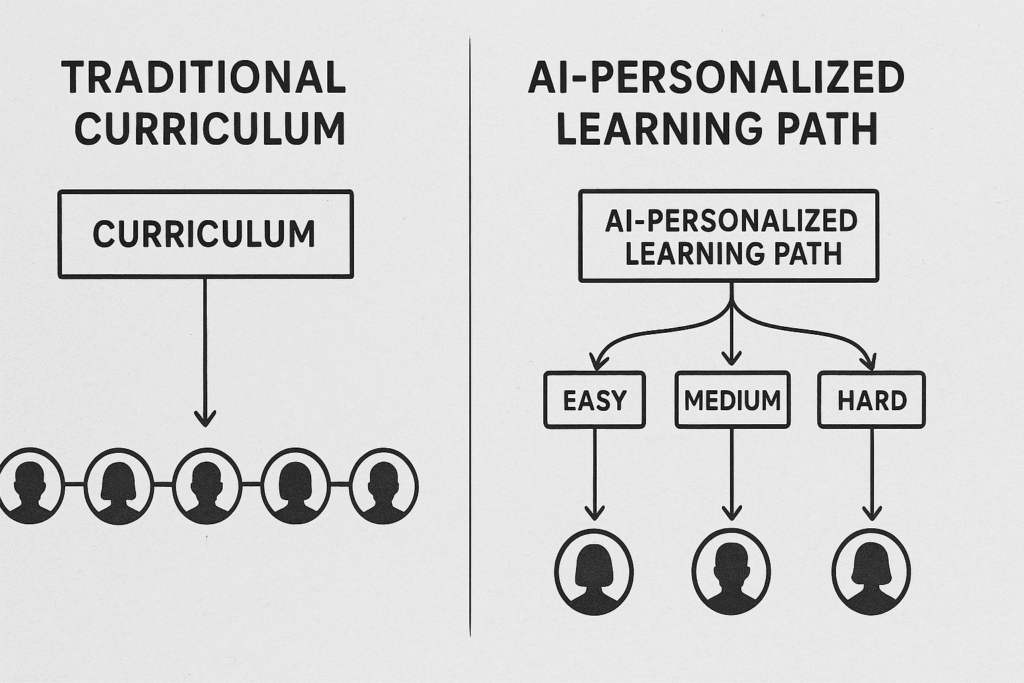
What It Is: AI-driven platforms analyze your learning patterns, strengths, and weaknesses to create customized study plans tailored specifically to your needs.
The Research Behind It: Students in personalized learning programs performed 8 points better in math and 9 points better in reading within a year. Even more impressive, 75% of students report feeling more motivated in personalized learning environments, compared to just 30% in traditional classrooms. A New Jersey school district achieved an impressive 87% engagement rate by the end of the year after implementing personalized AI learning.
The impact extends beyond grades: Schools that use personalized learning experience a 12% increase in attendance and a 15% reduction in dropout rates. Research from Coursera found that students achieved 70% better outcomes when learning was individually tailored versus one-size-fits-all approaches.
How to Get Started:
- Choose an AI learning platform like Khan Academy (which uses AI for personalized recommendations), Duolingo (for languages), or Century Tech
- Complete an initial assessment so the AI understands your current skill level
- Follow the curriculum the AI creates for you
- Allow the system to adjust as you progress—the more you use it, the smarter it becomes
Practical Example: Sarah, a high school student struggling with algebra, started using an AI tutoring platform. Within three weeks, the system identified that she understood equations but struggled with word problems. It automatically provided extra practice in that specific area, and her test scores improved by 25%.
Pro Tip: Spend at least 15-20 minutes daily on your personalized plan for best results. Consistency helps the AI better understand your learning pace and tailor recommendations accordingly.
Step 2: Use AI Writing Assistants for Better Essays and Research
What It Is: AI writing tools help students brainstorm ideas, organize thoughts, check grammar, improve clarity, and even detect potential plagiarism issues.
The Research Data: 45% of students use AI in school, and 40% report that AI-generated content helps them achieve better grades. More specifically, 26% of U.S. teens now use ChatGPT for schoolwork, a significant increase from 13% in 2023. When students use ChatGPT-5.1, research shows 54% use it for research purposes, 29% for solving math problems, and 18% for writing essays.
A controlled study involving 113 students and utilizing AI writing assistance found essay scores increased significantly, with an effect size of 0.71, and notable improvements in both essay structure and vocabulary sophistication.
How to Implement:
- Use tools like Grammarly or Microsoft Editor for grammar and style improvements
- Try AI research assistants to find credible sources quickly
- Use AI outlining tools to structure your essays logically
- Always review and personalize AI suggestions—don’t just copy them
Practical Example: College student James used an AI writing assistant while working on his history paper. The tool suggested stronger transitions between paragraphs, identified weak arguments that required additional evidence, and helped him cite sources correctly. His paper grade jumped from a B- to an A-.
Common Mistake to Avoid: Never submit AI-generated content as your own work. AI-related academic misconduct increased from 1.6 students per 1,000 in 2022-23 to 7.5 students per 1,000 in 2024-25, representing a nearly 400% increase. Use AI as a learning tool and editor, not as a replacement for your own thinking and writing.
Step 3: Master Subjects Faster with AI Tutoring Chatbots
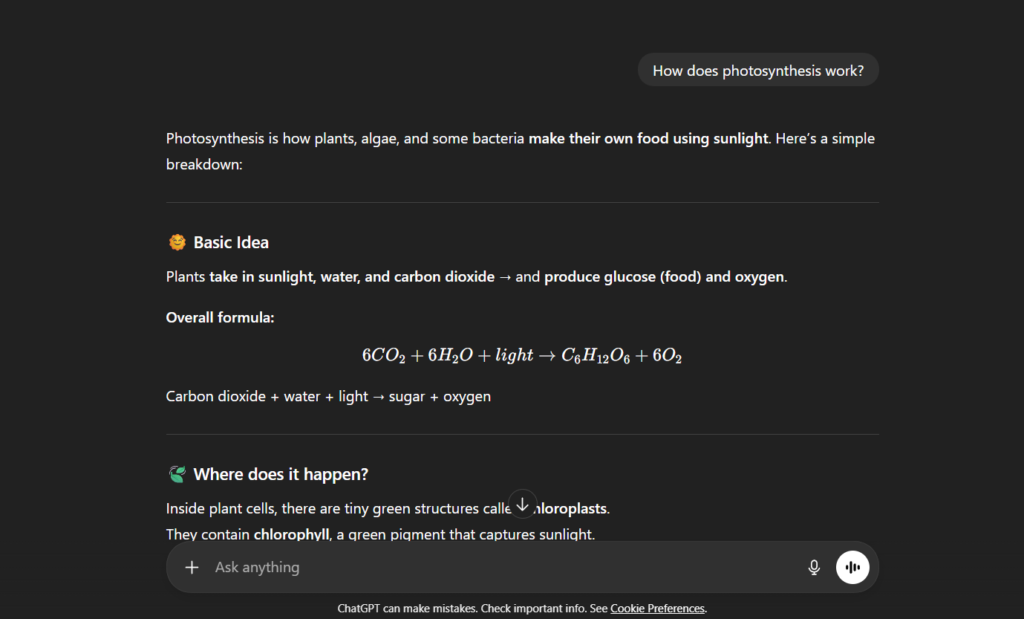
What It Is: The use of artificial intelligence in education now includes chatbots that instantly answer questions, explain complex concepts in simple terms, and provide step-by-step solutions to problems.
The Research Evidence: A meta-analysis of 24 randomized studies found that AI chatbots have a significant impact on students’ learning outcomes. Even more impressive, a randomized controlled trial found that students learn significantly more in less time when using AI tutors compared to traditional active learning classes, and also report feeling more engaged and motivated.
Research involving 4,597 K-12 students found that AI tutoring systems produced generally positive effects on learning and performance. 83% of students who use AI for academic work report using ChatGPT specifically, making it the dominant platform for educational assistance.
How to Access:
- Use dedicated educational chatbots designed for specific subjects (like Photomath for math)
- Ask AI assistants to explain concepts in different ways until you understand
- Request practice problems at your skill level
- Use the Socratic method: ask the AI to guide you rather than just giving answers
Practical Example: When studying for chemistry finals, Maria used an AI tutor to explain molecular bonding. Instead of just memorizing, she asked the AI, “Can you explain this like I’m ten years old?” Then, “Now explain it with the technical terms.” This dual approach helped her truly understand the concept.
Pro Tip: Don’t just ask for answers—ask “Can you show me how to solve this step-by-step?” to build problem-solving skills. Students who engage actively with AI tutors rather than passively receiving answers show significantly better long-term retention.
Step 4: Improve Time Management with AI Study Schedulers
What It Is: AI-powered scheduling tools analyze your courses, deadlines, energy levels, and learning patterns to create optimal study schedules.
The Data: AI improves course completion rates by 70% and reduces dropout rates by 15%. The technology also helps students manage stress better—critical when you consider that 38% of college students report symptoms of depression, 34% experience anxiety, and 14% report suicidal thoughts.
60% of teachers integrate AI into their teaching practices, and many use AI scheduling tools to coordinate assignments more effectively, thereby reducing student overwhelm.
Getting Started:
- Try apps like Shovel, My Study Life, or AI features in productivity tools
- Input all your assignments, tests, and deadlines
- Let the AI suggest when to study each subject based on your patterns
- Use AI to break large projects into manageable daily tasks
Practical Example: College sophomore Alex always procrastinated on major assignments. After adopting an AI scheduler, the tool broke his 20-page research paper into daily 1-hour tasks over three weeks. The AI even scheduled review sessions before the deadline. He finished early and with less stress.
Common Mistake: Don’t ignore the AI’s recommendations entirely. While you can adjust them, the system uses data to optimize your schedule—trust the process, especially early on.
Step 5: Enhance Language Learning with AI Conversation Partners
What It Is: AI language partners provide unlimited speaking practice, pronunciation feedback, and real-time corrections without the pressure of talking to real people.
Research Backing: China leads in AI education enthusiasm, with 80% of excited students, compared to 35% in the US and 38% in the UK. Language learning shows powerful results—students using AI conversation tools demonstrate measurable improvements in fluency, pronunciation accuracy, and confidence.
Studies on AI chatbots in language education show large positive effects on learning outcomes, with students appreciating the non-judgmental environment for practicing speaking skills.
How to Use:
- Download language apps with AI conversation features (Duolingo, Babbel, or Elsa Speak)
- Practice daily conversations with the AI
- Request feedback on pronunciation and grammar
- Gradually increase conversation difficulty as you improve
Practical Example: Learning Mandarin, Tom practiced speaking with an AI partner for 10 minutes daily. The AI corrected his tone immediately and provided cultural context. After six months, he felt confident enough to converse with native speakers during his study abroad trip.
Pro Tip: Don’t be afraid to make mistakes with AI—that’s what it’s there for! The more you practice, the faster you’ll improve. Research shows that students who practice daily, even for short sessions, outperform those who practice longer but less frequently.
Step 6: Get Instant Feedback with AI Grading and Assessment Tools
What It Is: AI systems provide immediate feedback on assignments, quizzes, and practice tests, helping you identify and fix mistakes right away rather than waiting days for teacher feedback.
The Research: An AI-powered grade prediction technology identified and saved over 34,700 failing students, demonstrating AI’s ability to intervene before problems become critical. 37% of institutions report higher student satisfaction due to AI-powered academic advising, and universities using AI tools experience a 12% increase in graduation rates.
60% of K-12 public school teachers now use AI tools during the school year, with 32% using them at least weekly. This widespread adoption means that more students receive faster and more detailed feedback.
Implementation Steps:
- Use platforms with built-in AI grading (Google Classroom, Canvas, Gradescope)
- Take practice quizzes that provide instant explanations for wrong answers
- Review the AI’s feedback carefully to understand your errors
- Track your progress over time using AI analytics
Practical Example: Before major tests, Lisa takes AI-graded practice exams. The system immediately shows which concepts she hasn’t mastered and provides targeted review resources. This approach helped her raise her GPA from 3.2 to 3.7 in one semester.
Important Note: The proportion of students saying university staff are well-equipped to work with AI jumped from 18% in 2024 to 42% in 2025, showing that educators are rapidly adapting to these tools.
Step 7: Access AI-Generated Study Materials and Resources
What It Is: AI can create custom flashcards, practice questions, summaries, and study guides based on your textbooks and lecture notes.
The Data: 51% of students use AI for brainstorming, and 53% use it to gather information. The efficiency gains are substantial—teachers using AI lesson generation saved over 2,000 hours after creating 699 lessons with AI assistance.
AI enhances retention rates by as much as 30% through personalized learning approaches, particularly when using spaced repetition techniques that AI can optimize based on individual memory patterns.
How to Utilize:
- Use tools like Quizlet (AI-powered study sets), Knowt, or RemNote
- Upload your notes and let AI generate study materials
- Practice with AI-created flashcards and quizzes
- Use spaced repetition features for better long-term retention
Practical Example: Before his biology exam, Marcus uploaded his semester’s lecture notes into an AI study tool. Within minutes, it generated 200 flashcards, 50 practice questions, and a comprehensive study guide organized by topic. He focused his studies on the areas the AI identified as weak spots.
Common Mistake: Don’t rely solely on AI-generated materials. Review them for accuracy and supplement with your own understanding and class materials. Around 2.4% of students think that AI is not beneficial for their education, often because they’ve experienced inaccurate AI outputs.
Step 8: Use AI for Research and Information Synthesis
What It Is: The application of artificial intelligence in education encompasses research, where AI tools assist students in locating relevant sources, synthesizing information from multiple documents, and identifying knowledge gaps.
Research Findings: Over 70% of students now rely on AI for research. 65% of students agree that AI tools are essential for success, and 71% of teachers believe AI tools are crucial for student success in college and the workplace.
The efficiency improvement is remarkable—tasks that previously took weeks can now be completed in hours, giving students more time for critical analysis and original thinking.
Action Steps:
- Use AI research tools to find credible academic sources quickly
- Ask AI to summarize lengthy research papers in simple language
- Use AI to identify connections between different sources
- Always verify AI findings with sources
Practical Example: For her thesis, graduate student Elena used AI to scan through 50 research papers and identify common themes. What would have taken weeks took just hours, giving her more time for critical analysis and original thinking.
Pro Tip: Utilize AI to expedite the information-gathering phase, but allocate your human energy to critical thinking, analysis, and generating original insights. 59% of teachers expect students to have basic AI skills by the time they reach Grade 6, and by the time they graduate from university, making AI literacy increasingly essential.
Use of Artificial Intelligence in Education
Step 9: Develop Critical Thinking with AI Debate Partners
What It Is: AI can challenge your ideas, play devil’s advocate, and help you strengthen arguments by providing opposing viewpoints.
The Evidence: While AI can enhance critical thinking, research shows it’s important to use it correctly. Studies indicate that excessive reliance on AI for answers can hinder the development of critical thinking. However, when used to challenge ideas and explore different perspectives, AI becomes a powerful tool for developing argumentation skills.
Only 16% of students are mostly positive about using AI, with many concerned about its impact on their learning. The key is using AI to strengthen your thinking, not replace it.
How to Practice:
- Present your thesis or argument to an AI assistant
- Ask it to identify weaknesses in your reasoning
- Request counterarguments to your position
- Use the AI’s feedback to strengthen your critical thinking
Practical Example: Preparing for his debate competition, Kevin practiced arguments with an AI that challenged every point he made. This preparation enabled him to anticipate his opponents’ arguments and develop more effective rebuttals. He won second place in the regional competition.
Research Note: Studies on AI and critical thinking reveal that AI-based personalized learning systems increase student engagement, motivation, and participation, with regression analysis showing strong positive correlations.
Use of Artificial Intelligence in Education
Step 10: Monitor Mental Health and Well-being with AI Support
What It Is: AI wellness tools help students manage stress, maintain work-life balance, and identify when they might need additional support.
Critical Statistics: The need for mental health support is urgent. Nearly one in five students accessed school-based mental health services in the 2024-25 school year. The national average student-to-counselor ratio stands at 376:1, far exceeding the recommended 250:1.
Recent research on AI mental health chatbots shows promise. Studies involving college students found that AI wellness chatbots can provide immediate support and help students develop coping strategies. However, some studies have found that ChatGPT outperforms humans in assessing emotional awareness based on text; however, researchers emphasize that AI should supplement, not replace, professional therapy.
Implementation:
- Use apps like Wysa or Woebot for mental health check-ins
- Set AI reminders for breaks during study sessions
- Track stress levels and get AI-suggested coping strategies
- Connect with human counselors when AI identifies concerning patterns
Practical Example: During finals week, the AI wellness app noticed Daniel’s stress levels were consistently high. It suggested breathing exercises, recommended shorter study sessions with more breaks, and eventually prompted him to schedule an appointment with campus counseling. He felt supported and managed his anxiety better.
Important Note: AI mental health tools are supplementary, not replacements for professional help. According to a WGU Labs study, 41% of online learners would be comfortable with AI suggesting mental health strategies based on their data, but always consult qualified professionals for serious concerns.
Use of Artificial Intelligence in Education
The Current State of AI Adoption in Education: What the Numbers Show
Student Usage Statistics
88% of students have used generative AI for assessments, marking a substantial increase from 53% in 2024. The growth is even more dramatic when considering overall usage: AI usage among university students increased from 66% in 2024 to 92% in 2025.
By Age Group:
- 51% of young people between 14 and 22 use generative AI
- Usage among high schoolers: 31% for 11th-12th graders, 26% for 9th-10th graders, and 20% for 7th-8th graders
Teacher Adoption
83% of K-12 teachers use generative AI tools for either personal purposes or school-related activities. Teachers’ use of AI has grown significantly, with 20% using it daily for lesson preparation and 18% for administrative work.
The use of generative AI tools by teachers increased by 32% between the 2022-2023 and 2023-2024 school years, indicating rapid professional adoption.
Market Growth
The numbers reflect genuine transformation:
- The AI in education market is expected to reach $112.3 billion by 2034
- From 2025 to 2029, the market is expected to increase by 41.4%
- 92% of business leaders plan to increase AI spending
Use of Artificial Intelligence in Education
Common Mistakes to Avoid When Using AI in Education
1. Over-Reliance on AI
Don’t let AI do all the thinking for you. Use it as a tool to enhance your learning, not as a replacement for it. The goal is to understand concepts deeply, not just get quick answers. Research suggests that students who become overly reliant on AI may experience a decline in their critical thinking abilities.
2. Ignoring Privacy Concerns
Be cautious about sharing personal information and academic data with AI platforms. Read privacy policies and use reputable, education-focused tools. Students’ main factors discouraging AI use include being accused of cheating (53%) and getting false results or hallucinations (51%).
3. Not Verifying AI Information
AI can make mistakes or provide outdated information. Turnitin has reviewed more than 200 million student papers since its launch in 2023, showing institutions’ serious concerns about AI accuracy. Always verify important facts with authoritative sources, especially when working on research papers and assignments.
4. Skipping the Learning Process
Using AI to complete assignments without understanding the material defeats the purpose of education. 51% of students use AI to save time, closely followed by 50% who use it to improve work quality—but the goal should be learning, not just efficiency.
5. Expecting Instant Mastery
AI accelerates learning but doesn’t eliminate the need for practice and time. Be patient with yourself and trust the process. Approximately 74% of districts plan to train teachers on AI by Fall 2025, indicating that even educators require time to master these tools.
Frequently Asked Questions (FAQs)
Q1: Will using AI in my studies be considered cheating?
A: It depends on how you use it. Using AI to understand concepts, check grammar, or generate study materials is generally acceptable. However, submitting AI-generated work as your own or using AI during closed-book exams is typically considered academic dishonesty. Only 29% of higher education students say their institution encourages the use of AI, while 40% disagree; therefore, it is essential always to check your institution’s specific policies.
Q2: Do I need technical skills to use AI educational tools?
A: Not at all! Most AI education tools in 2026 are designed to be user-friendly with intuitive interfaces. 89% of students acknowledge using ChatGPT for homework, showing these tools are accessible to average users. If you can use a smartphone app, you can use AI learning tools.
Q3: Are AI educational tools expensive?
A: Many AI learning tools offer free versions with basic features. Premium versions typically cost $5 to $20 per month, although some, like Khan Academy, remain completely free. Many schools also provide institutional access to AI platforms, making them more accessible to a wide range of students.
Q4: Can AI replace teachers? .A: No. The use of artificial intelligence in education is meant to complement, not replace, human teachers. The World Economic Forum reports that 71% of teachers and 65% of students view AI assistants as essential for learning and workforce preparation. Still, AI excels at personalization and providing instant feedback, while teachers offer mentorship, emotional support, guidance on critical thinking, and a human connection that AI cannot replicate.
Q5: How much time should I spend using AI learning tools daily?
A: Start with 20-30 minutes daily and adjust based on your needs. Quality matters more than quantity. Among those who use AI, 64% use it a few times a month or less for school assignments, while 28% use it once or a few times a week. Integrate AI tools naturally into your existing study routine rather than treating them as separate activities.
Q6: Will AI work for my specific learning disability or challenge?
A: Many AI tools are designed with accessibility features and can be particularly helpful for students with dyslexia, ADHD, or other learning differences. Look for platforms specifically designed for accessible education. Research shows AI personalization can adapt to diverse learning needs more effectively than traditional one-size-fits-all approaches.
Q7: How do I know if an AI educational tool is trustworthy?
A: Look for tools endorsed by educational institutions, read reviews from other students and educators, check if the company has educational credentials or partnerships, and start with well-known platforms like Khan Academy, Duolingo, or Coursera. Approximately 26% of districts planned to offer AI training during the 2024-2025 school year, and many recommend specific trusted platforms.
Q8: What about concerns that AI will harm critical thinking?
A: This is a valid concern. Research indicates that the key lies in how AI is utilized. When students use AI to get quick answers without engaging deeply with the material, critical thinking can suffer. However, when AI is used to explore different perspectives, challenge assumptions, and practice problem-solving, it can enhance critical thinking. The goal is active engagement with AI, not passive consumption of AI-generated content.
Use of Artificial Intelligence in Education
Conclusion: Embracing AI for Educational Success in 2026
The use of artificial intelligence in education represents one of the most exciting developments in learning since the advent of the internet. By 2026, AI won’t just be a futuristic concept—it’ll be an everyday companion in your educational journey, helping you learn smarter, not harder.
The research is detailed and compelling:
- Students in AI-powered learning environments achieve 54% higher test scores and show 30% better learning outcomes
- AI enhances retention rates by as much as 30% through personalized learning
- 75% of students feel more motivated in personalized learning versus 30% in traditional classrooms
- Universities using AI tools experience a 12% increase in graduation rates
The ten strategies we’ve covered—from personalized learning platforms to AI tutoring chatbots, from smart scheduling to mental health support—all point to one central truth: AI democratizes access to high-quality, customized education. Whether you’re struggling with a specific subject or aiming for top grades, AI tools level the playing field by giving everyone access to tailored support.
Remember these key takeaways:
- Start small by integrating one or two AI tools into your routine
- Use AI to enhance your learning, not replace your own thinking
- 60% of Tennessee educators mention that AI skills can benefit students, and 69% feel these skills will help students get high-paying jobs in the future
- Stay curious and don’t be afraid to experiment with different tools
- Always verify important information and maintain academic integrity
- Balance AI assistance with human interaction from teachers and peers
The Growing Acceptance: The use of generative AI tools by teachers increased by 32% between the 2022-2023 and 2023-2024 school years. This rapid adoption by educators shows that AI is becoming integrated into mainstream education. Only 29% of higher education students say their institution encourages the use of AI, but this number is changing rapidly as institutions develop clearer policies.
The students who will thrive in 2026 and beyond won’t necessarily be the ones who avoid AI—they’ll be the ones who learn to use it wisely and ethically as part of a well-rounded educational approach. The future of learning is personalized, accessible, and powered by AI. The question isn’t whether to embrace these tools, but how to use them most effectively for your unique learning journey.
Global Perspective: China leads in AI education enthusiasm with 80% of students excited, compared to 35% in the US and 38% in the UK. This global adoption shows that AI literacy is becoming as fundamental as traditional literacy.
So take that first step today. Choose one AI tool from this guide, try it for a week, and watch how it transforms your learning experience. The data shows it works—now it’s your turn to experience the benefits. With the AI education market projected to grow from $7.57 billion in 2025 to $112.30 billion by 2034, resources and support for AI-enhanced learning are expected to improve.
Your future successful self will thank you!
Ready to boost your academic success with AI? Start experimenting with these research-backed tools today and discover which ones work best for your learning style!
Use of Artificial Intelligence in EducationUse of Artificial Intelligence in EducationUse of Artificial Intelligence in EducationUse of Artificial Intelligence in Education